BAM: The 90 Day Plan
Getting to a decision about a benefits plan is generally the easy part. The ninety days after it is where the work quietly goes missing.

The 90 Day Plan is a one page worksheet that holds five commitments. Each line carries one named owner, one measure, and the value of that measure written down on the day you commit. Ninety days later the same sheet comes back out and you record what the number actually is.
The five lines come out of the Benefits Accountability Matrix, which is the sheet that decides what is worth working on in the first place. This one holds you to it.
This working guide is an easy accountability tool for plan sponsors and fiduciaries seeking to monitor their plan. It doesn't require any proprietary tools, a consulting engagement, or outside review. While it would be helpful to review alongside your benefits advisor, it is not necessary, and can even be an accountability tool for them as well.
The process is simple. Complete the left side of the page based on what you uncover in the BAM process. Revisit in ninety days. Rinse. Repeat.
The left side gets filled in first on purpose. A number written down before anyone knows the answer is the only part of this that can come back and tell you something you did not want to hear.
I have also included some FAQs below that may be helpful, and for any other questions, you are welcome to get in touch.
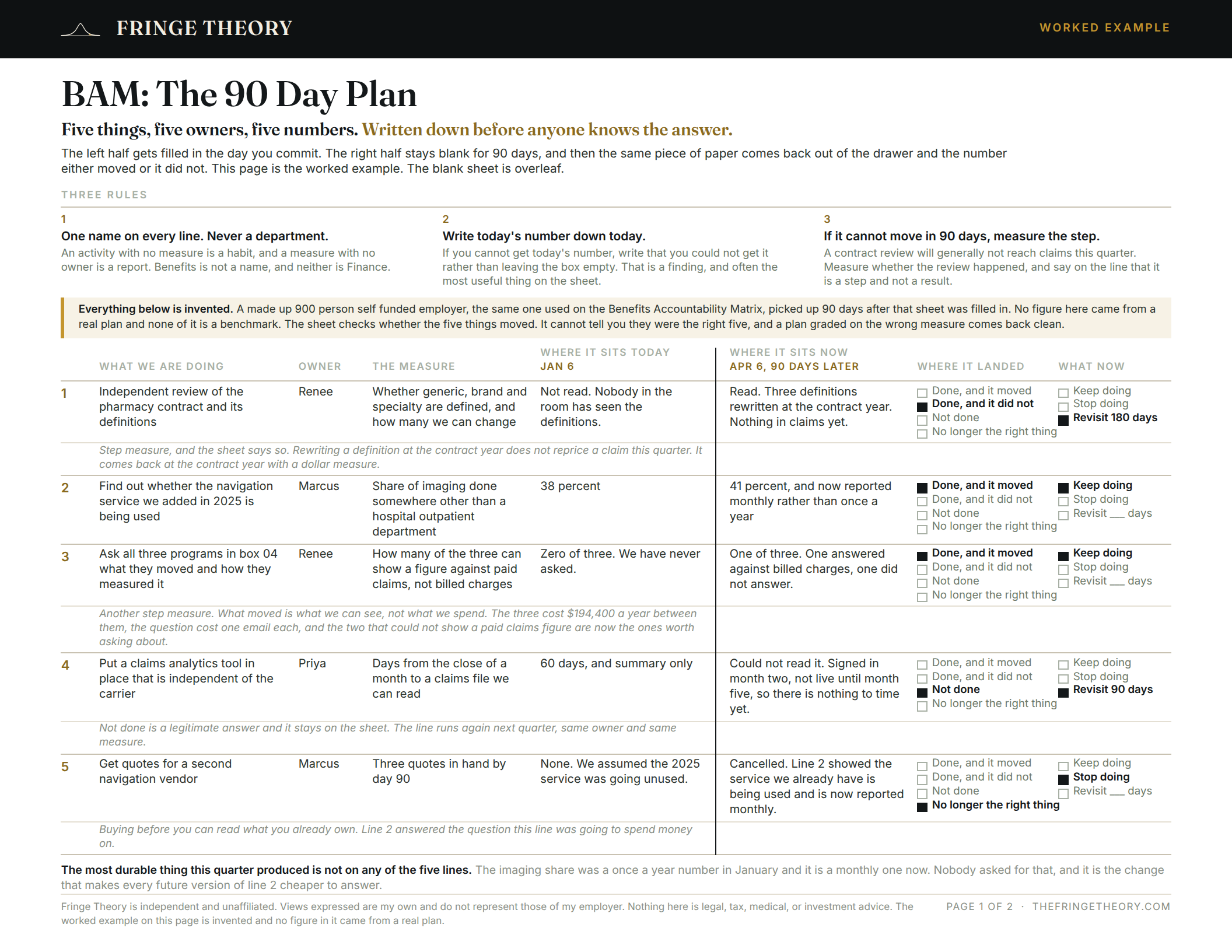
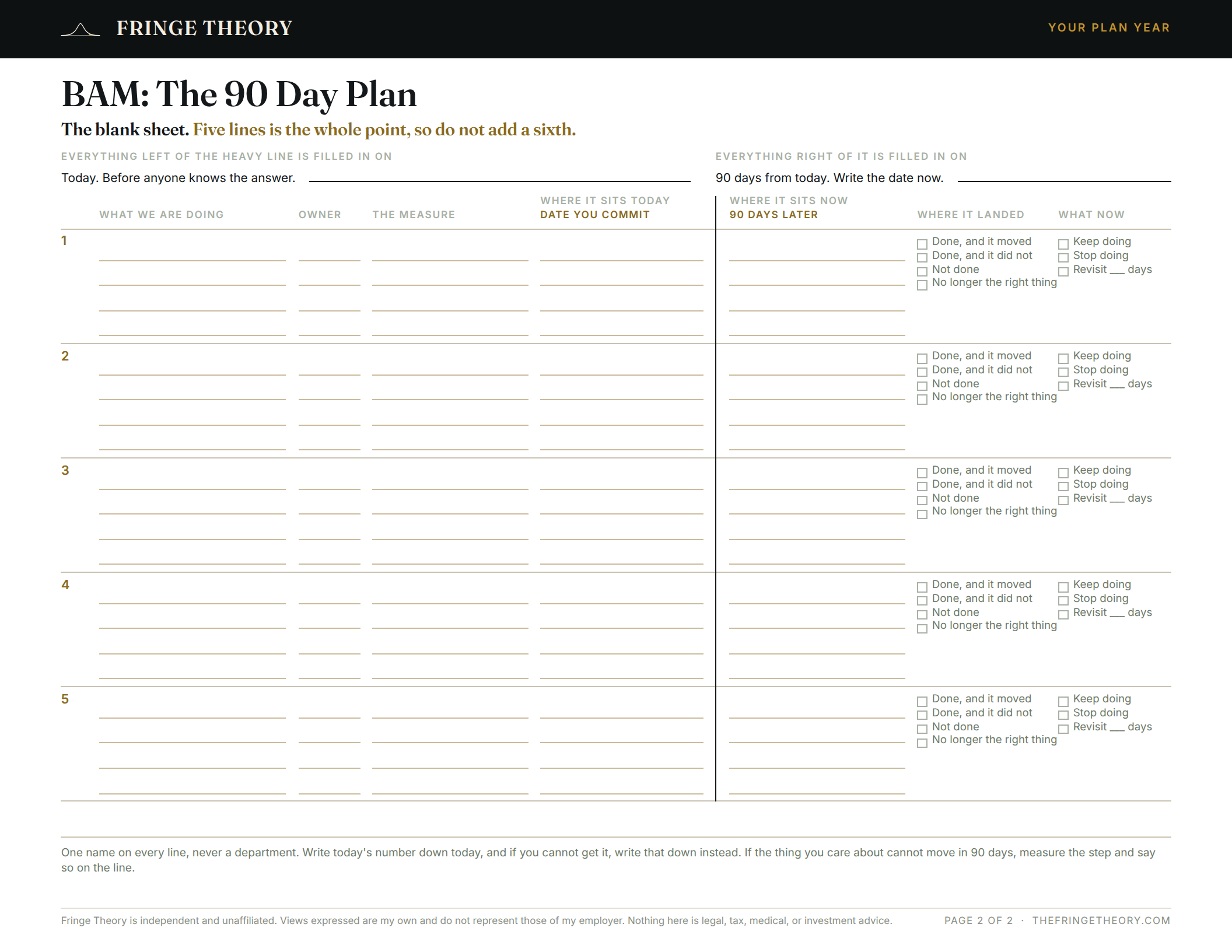
Two pages, landscape. The front is a worked example, a made up 900 person self funded manufacturer carried on from the matrix and picked up ninety days later. The back is blank and meant to be written on.
Download the worksheet
Download the 90 Day Plan, two pages, PDF
Companion sheet: the Benefits Accountability Matrix, which is where the five lines on this sheet should come from.
What if the thing you care about cannot move in ninety days?
Then measure the step, and say on the line that it is a step.
A pharmacy contract review will generally not reach claims inside a quarter, since repricing shows up at the contract year. So the honest measure is whether the review happened and how many definitions changed, and the line should say plainly that what moved is what you can see rather than what you spend. The worked example runs two of these and labels both.
What are the four outcomes for?
Done and the number moved. Done and it did not. Not done. No longer the right thing.
The last two are the ones that earn the sheet. Not done stays written down and runs again next quarter, which is what stops a plan quietly turning into a wish. And no longer the right thing is a real result, because sometimes ninety days teaches you that what you committed to in January is not worth doing in April.
In the worked example that is what happens. A line to get quotes for a second navigation vendor gets stopped in February, because the line above it was still busy measuring the navigation service they already pay for.
How do you fill it in?
Day zero. Five lines, five owners, five numbers, filled in with the people who actually decide rather than by one person who then hands it up.
Day ninety. Same sheet, right hand side, and be honest about the ones that did not happen.
Then back to the matrix. A line that came back done and it did not move means the impact rating was wrong. A line that came back no longer the right thing means the response was wrong. And anything in box 04 that still cannot produce a return goes back on the matrix marked not measured, in front of the people who approved it.
Does the Benefits Accountability Matrix get redone every ninety days too?
Not always.
Structural drag does not turn over in a quarter. Two hospital systems owning your market is not a Q2 problem, and re-rating it every ninety days invites the committee to relitigate decisions it already made. The stop focusing corner is worth something precisely because it persists, since it is the written record of what you decided to quit.
So the matrix gets rebuilt about once a year, generally before renewal, and this sheet runs four times against it. After four cycles you rebuild the matrix out of things you actually measured rather than things you rated, which is the point where the set starts to compound.
What do the four BAM worksheets add up to?
The BAM set is now four worksheets and all of them are free. There is no gate, no form, no email required, and no version of any of them that costs money.
I think it is about the closest an employer will get to an open self-help guidebook for a benefits program, though that is my own read rather than a survey of the market. The matrix decides what to work on. The Iceberg Review shows where the money is actually concentrated. Where the leverage is ranks what can move it. This sheet holds you to what you said you would do about it. Each one carries a prompt you can run your own claims file through, and a workbook page to put the answers on.
None of it requires a consultant in the room to be useful, which is deliberate.
Fringe Theory is independent and unaffiliated. Views expressed are my own and do not represent those of my employer. Nothing here is legal, tax, medical, or investment advice.